
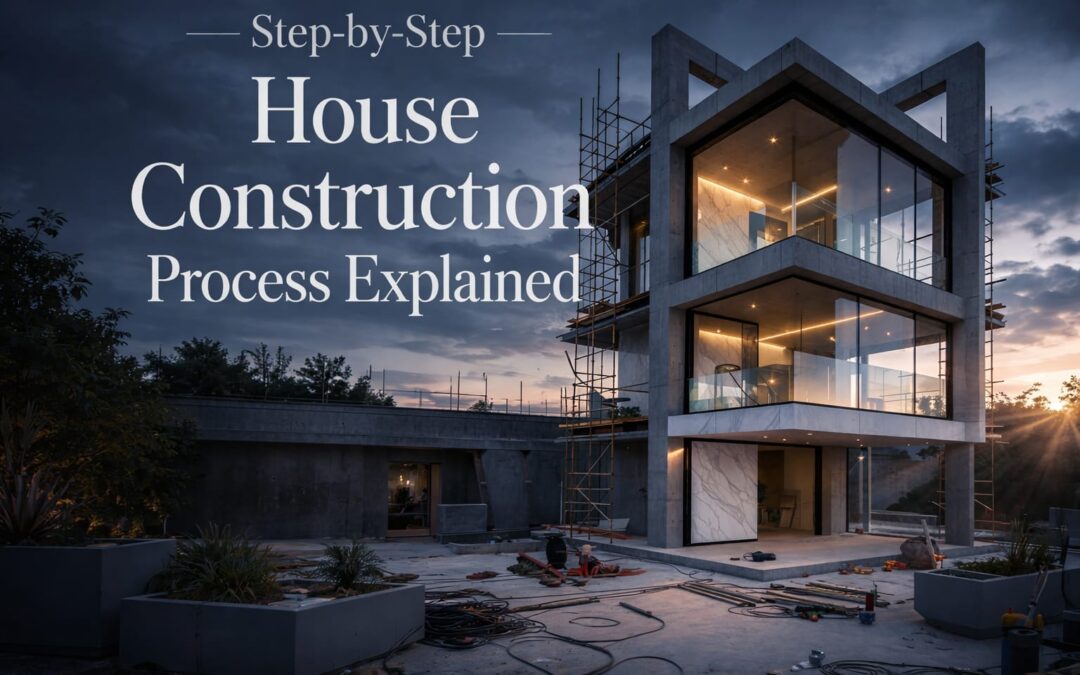
Understanding the house construction process in Vellore step by step is one of the smartest things you can do before breaking ground. Whether you are a first-time homeowner or adding to your property portfolio, knowing what happens at each stage gives you control, clarity, and confidence from day one. This complete guide walks you through every phase of the house construction process in Vellore so you always know what is happening on your site and when.
Building a house is one of the biggest undertakings of your life. Whether you are a first-time homeowner or adding to your property portfolio, understanding the house construction process step by step gives you control, clarity, and confidence from day one. This guide walks you through every phase of house construction process in Vellore so you know exactly what is happening on your site and when.
Contents
- 1 Step 1 of the House Construction Process: Site Selection and Soil Testing
- 2 Step 2: Architectural Design and Planning
- 3 Step 3: Building Plan Approval and DTCP Clearance
- 4 Step 4: Foundation Work
- 5 Step 5: Superstructure — Columns, Beams, and Slabs
- 6 Step 6: Brickwork and Masonry
- 7 Step 7: Roofing and Waterproofing
- 8 Step 8: Plumbing and Electrical Rough-In
- 9 Step 9: Plastering and Finishing Work
- 10 Step 10: Final Fit-Out, Testing, and Handover
- 11 Trust the House Construction Process to Excellent Builders
Step 1 of the House Construction Process: Site Selection and Soil Testing
Before any construction begins, the site needs to be properly assessed. In Vellore, soil conditions vary considerably between different localities. A soil test — also called a geotechnical investigation — determines the bearing capacity of the soil, which directly affects the type of foundation your home will need. Skipping this step is one of the most common mistakes homeowners make, and it often leads to foundation failures and structural cracks years later.
A good builder in Vellore will always recommend a soil test before finalising the design. It costs a fraction of the overall project but saves you enormous trouble down the line.
Step 2: Architectural Design and Planning
Once the soil test results are in, the architectural design phase begins. This is where your vision starts to take shape on paper. A qualified architect will develop floor plans, elevations, section drawings, and structural drawings based on your brief. In Vellore, this process also involves checking vastu alignment for clients who require it, as well as ensuring the design complies with local building bye-laws regarding setbacks, FAR, and height restrictions.
Good design is not just about aesthetics — it is about function, durability, and cost-efficiency. A home designed with Vellore’s climate in mind will have better natural ventilation, optimal window placement, and appropriate roof design to manage rainwater effectively.
Step 3: Building Plan Approval and DTCP Clearance
No construction can legally begin without the necessary approvals. In Vellore, this means obtaining building plan sanction from the local municipality or DTCP, depending on the location of the plot. The approval process involves submitting architectural drawings, structural drawings, and site documents to the relevant authority.
Working with a registered builder in Vellore who has handled hundreds of approvals in the region saves weeks of back-and-forth. You can also verify builder credentials on the Tamil Nadu RERA portal before you begin. Legal compliance at this stage protects you from complications when you want to sell or refinance the property in the future.
Step 4: Foundation Work
With approvals in hand, the physical construction begins. The foundation is the most critical structural element of your home. Based on the soil test results, the structural engineer will specify either an isolated footing, strip foundation, or raft foundation. In Vellore’s varied terrain, isolated footings with tie beams are the most common for residential construction.
The foundation work involves excavation, formwork, reinforcement placement, and concrete pouring. The quality of materials here — specifically the grade of TMT steel and the mix of concrete — determines the structural integrity of your home for decades. Never accept shortcuts on the foundation, regardless of the cost pressure.
Step 5: Superstructure — Columns, Beams, and Slabs
Once the foundation is cured, the superstructure goes up. This phase includes constructing the columns and plinth beams, laying the plinth filling, and constructing the ground floor slab. For multi-storey homes, each floor slab is poured after the columns for that level are complete. Concrete needs adequate curing time — typically 21 to 28 days — before the formwork can be stripped and the next level started.
This phase is highly visible and feels like great progress, but it is also where quality control is most important. Concrete mix ratios, steel placement cover, and proper compaction during pouring all matter enormously for long-term structural performance.
Step 6: Brickwork and Masonry
With the RCC structure complete, the walls go up. In Vellore, burnt clay bricks are the most commonly used masonry unit for residential construction, though AAC blocks are increasingly popular for their thermal insulation and lightweight properties. Good quality mortar mixing, proper curing of brickwork, and maintaining plumb and level walls are the markers of quality masonry work.
External walls should be thicker than internal partition walls for better insulation, and lintel beams above door and window openings are structural requirements that some builders skip to save time and cost. Do not let this happen on your site.
Step 7: Roofing and Waterproofing
The roof slab is typically the last major RCC pour in a single-storey home. After curing, waterproofing treatment is applied to the terrace before any finishing layer is laid. In Vellore, where monsoon rainfall can be significant in certain seasons, proper terrace waterproofing is not optional — it is essential.
Good waterproofing involves a combination of bituminous coating, china mosaic or IPS screed, and properly designed drainage slopes. A terrace that puddles water will leak into the slab and cause structural damage and ceiling staining within just a few monsoon seasons.
Step 8: Plumbing and Electrical Rough-In
Before walls are plastered and floors are laid, all plumbing pipes and electrical conduits must be installed. This phase — called the rough-in — involves laying CPVC or UPVC pipes for water supply, PVC pipes for drainage and sewage, and electrical conduits for wiring. Getting these routes right before the walls close is critical, because any changes after plastering are expensive and messy.
Quality builders use branded plumbing and electrical materials and provide the client with a layout drawing showing where every pipe and conduit runs. This is valuable documentation for future maintenance and renovations.
Step 9: Plastering and Finishing Work
Internal and external plastering follows the rough-in phase. Good plastering work is flat, even, and properly cured before painting. External plastering needs to be done in layers and may include a waterproof additive for extra protection against moisture ingress. Once plastering is done, the finishing work begins — flooring, tiling, door and window frames, and painting.
The sequence matters: floors are laid before painting, doors are hung before final painting, and electrical fittings are installed after the final coat of paint. A builder who respects this sequence delivers a cleaner, more professional finish.
Step 10: Final Fit-Out, Testing, and Handover
The final phase includes installing electrical fixtures, sanitary fittings, kitchen fittings, and any built-in furniture or cabinetry. Once all installations are complete, the builder should conduct a thorough snagging inspection — checking every switch, every tap, every door, and every window — before calling you for the pre-handover walkthrough.
At handover, you should receive the Occupancy Certificate from the local authority, as-built drawings, material warranties where applicable, and a full briefing on the post-possession maintenance schedule. The handover day marks the end of one journey and the beginning of another — your life in a home built just for you.
Trust the House Construction Process to Excellent Builders
At Excellent Builders Vellore, every one of these ten steps is executed with the same standard: quality materials, skilled tradespeople, proper supervision, and complete transparency with the client. We have been building homes, industrial facilities, and commercial spaces in Vellore for over 30 years — and every project follows this exact process, without shortcuts, without compromises.
Our clients receive milestone-based progress updates, itemised material invoices, and a dedicated site supervisor who is reachable throughout the project. We handle all approvals in-house, we use only branded materials, and we stand behind our work with a comprehensive after-sales support structure. Because for us, the house construction process does not end at handover — it ends when you are genuinely satisfied.
Ready to begin your home construction journey in Vellore? Contact Excellent Builders today for a free site visit and consultation. Let us walk through every step together.